The Ferryman’s Obol – The Coin That Refused to Cross the River
⏳ Estimated reading time: 11 minutes
The Ferryman’s Obol – The Coin That Refused to Cross the River
Every soul must pay the ferryman—but what happens when the payment is refused?
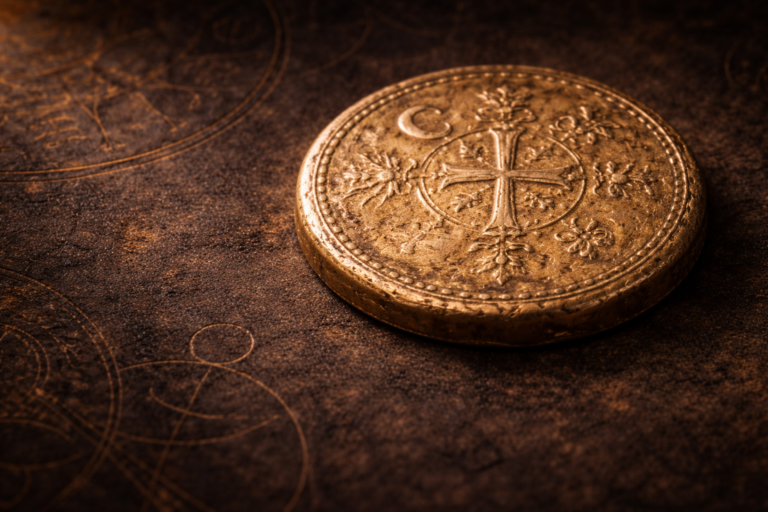
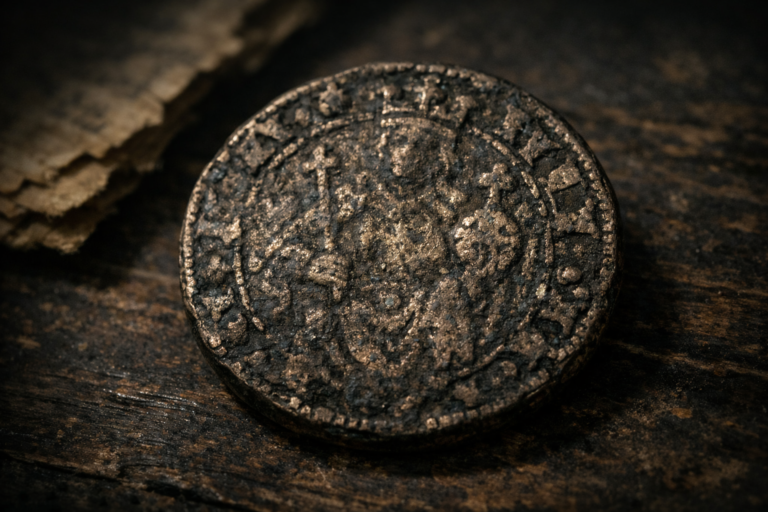
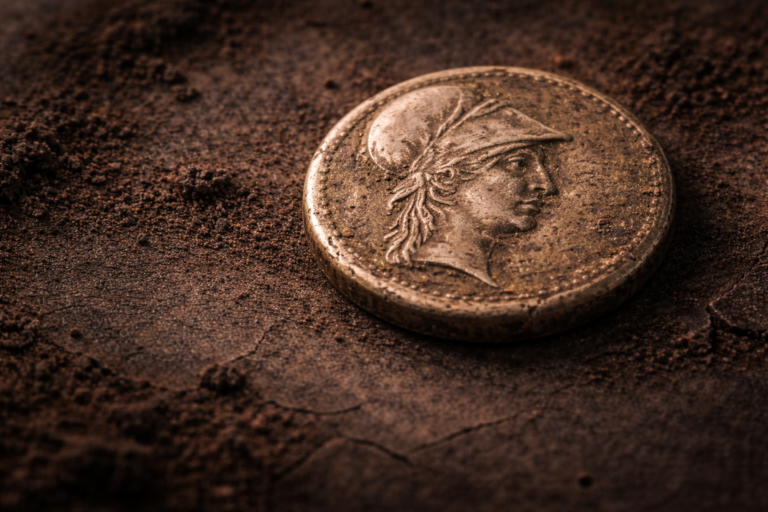
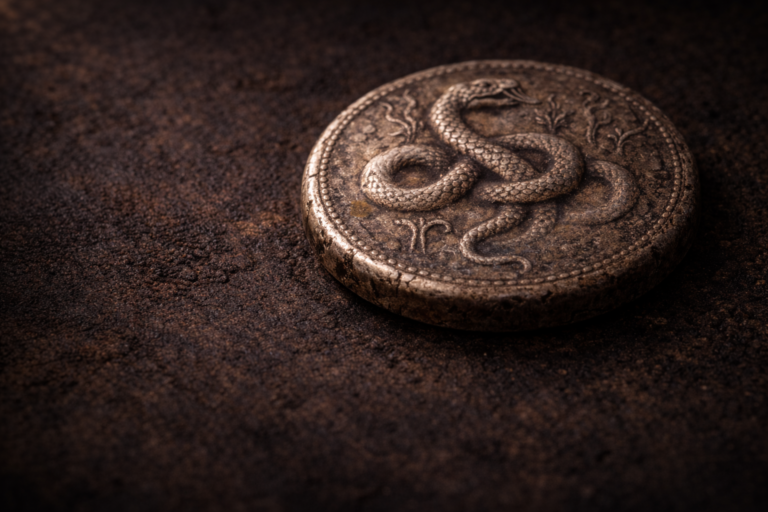
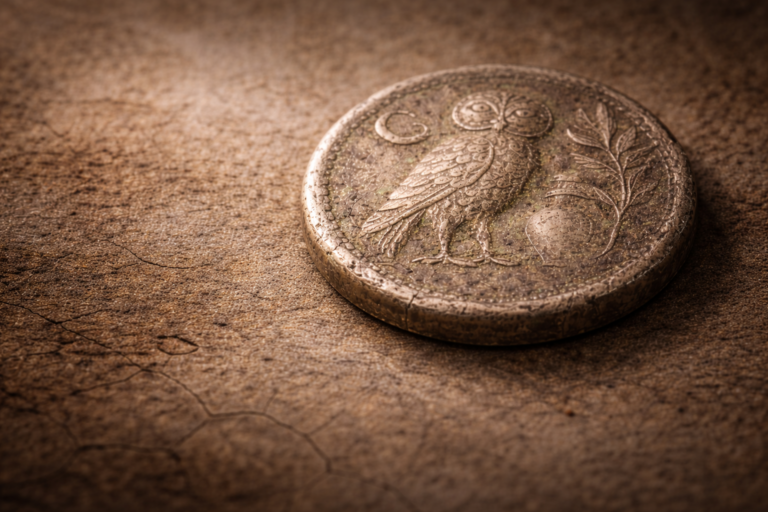
In the summer of 1912, a team of divers exploring the submerged necropolis of Pavlopetri off the coast of Laconia uncovered something extraordinary—a tomb sealed in coral and salt for nearly three millennia. Inside lay a skeleton still adorned with faint traces of funerary cloth and, resting upon its lips, a small bronze coin, impossibly preserved.
The inscription was faint, but clear enough to decipher: “To Charon, guide and judge.” Yet what puzzled the archaeologists most wasn’t the inscription—it was the patina. The coin showed no corrosion, no decay, as though the river itself had refused to touch it.
🌊 The Tomb That Wouldn’t Drown
The chamber around the body was dry, though buried beneath six meters of seawater. Instruments detected a thin layer of air separating the tomb from the ocean, as if the waves were held back by an unseen hand. When the divers broke through the inner seal, the pressure collapsed instantly—flooding the site and dispersing the contents. Only the coin remained visible, glimmering like an eye beneath the sand.
Among the recovered relics were fragments of pottery depicting a hooded figure steering a small boat across a black river—Charon, the ferryman of the underworld. Yet, unlike typical funerary scenes, this one showed the boat empty, drifting aimlessly, its oar upright like a grave marker.
Locals who heard of the discovery refused to approach the site, warning that “the dead below never left.” A storm struck the following night, scattering the expedition’s camp and dragging their supply vessel into the deep. The only survivor, Captain Markos Dalaras, later claimed he saw a shape moving through the flooded ruins—“a man of bronze, rowing without water.”
🪙 The Obol Returns
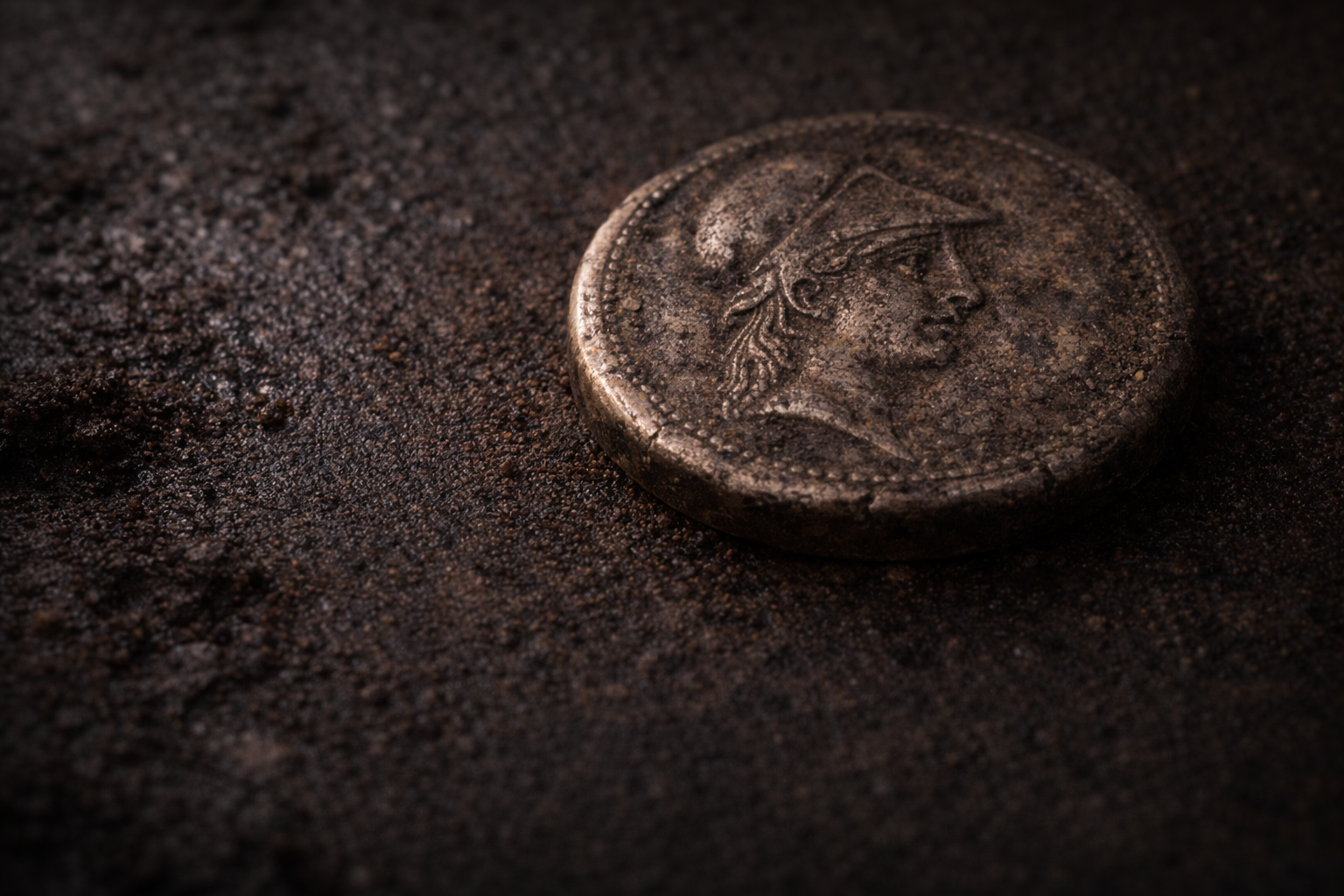
Weeks later, the coin was retrieved and sent to Athens for study. The curator noted an unusual property: it remained unnaturally cold, even when held near flame. Under ultraviolet light, a faint image appeared—a river winding through a field of stars, and a tiny boat stranded midstream.
The artifact was catalogued under the name “Obolos Ἀπέραντος”—The Endless Obol. A report in the Journal of Hellenic Antiquities described it as “a funerary offering that defied burial.” Soon after publication, the issue was withdrawn without explanation.
Researchers who handled the coin began to suffer from recurring nightmares—visions of crossing a dark river with no shore in sight. Some claimed they could hear the sound of oars splashing behind them, always closer, but never seen. Within months, two members of the team drowned in separate accidents.
⚰️ The Whisper in the Water
One of the surviving archaeologists, Elena Vassilou, documented her experience in a private letter:
“I hear him calling from the water. He asks for his coin back. He says he cannot cross without it, but if I return it… he will take me instead.”
Her letter was found sealed inside a jar on the shore of Gytheio three months later. No trace of her body was ever recovered.
By the 1930s, the legend of the Ferryman’s Obol had become a whispered warning among divers and museum staff alike. They said the coin had passed through multiple collections, never staying long—its owners plagued by floods, shipwrecks, or the sudden breaking of mirrors reflecting still water.
Part 2 will reveal the final fate of the Ferryman’s Obol, the theory behind its curse, and the archaeological evidence linking it to other coins of the underworld—plus the Reality Check and Final Thought sections.
🌒 The Curse of the River
In 1958, the Ferryman’s Obol resurfaced once again—this time in the archives of the British Museum. It had been purchased anonymously through an auction in Marseille, listed simply as a “Greek bronze charm.” Within months, strange water damage began appearing on the museum’s lower storage floors, even though no pipes ran beneath them. Curators reported hearing sounds of splashing during night shifts, and several employees resigned after seeing what they described as “a shadow rowing through the reflections.”
When the artifact was finally transferred to the restoration wing, the technician in charge discovered condensation forming on the coin’s display case—yet the glass was sealed. The water traced patterns resembling waves and oars. He recorded the phenomenon on film, but the footage ended abruptly when the lights went out. The next morning, the technician was found unconscious beside an overturned water tank. His first words upon waking: “He didn’t take it… He left me behind.”
🚢 The Sunken Vault
In 1975, a private collector named Adrian Devereux acquired the coin and sealed it in a vault aboard his yacht, claiming it was “the only relic that listens.” Two months later, the vessel sank off the coast of Crete. When divers recovered the wreck, they found the vault door ajar but completely dry inside. The coin floated in the air pocket above the debris, perfectly centered, as though it refused to touch the sea.
The Greek press called it “the coin that would not drown.” Others began to wonder if the ancient ritual of placing an obol in the mouth of the dead was not just symbolic—it was an insurance policy. What if, by removing this particular coin, someone had left a soul stranded on the wrong side of the river?
🕯️ The Endless Crossing
By the early 2000s, fragments of the Ferryman’s Obol were reported in several museum collections. Experts theorized the original coin had cracked or been split, its curse divided among the pieces. Yet one piece, the largest, was reportedly seen glowing faintly beneath glass at a maritime exhibition in Piraeus—until the case flooded overnight from an unexplained water leak. The curators drained the room. The coin was gone.
Eyewitnesses claimed they saw a ripple move across the museum floor, reflecting torchlight from nowhere. One visitor swore he heard oars on the marble steps, receding into silence. After that night, the exhibition closed permanently.
And so, the Ferryman’s Obol became what it was always meant to be—a payment unspent, a passage never taken. They say it still drifts between tides, waiting for someone to take it back to the underworld where it belongs.
💀 Reality Check
The ancient Greek practice of placing an obol coin in tombs for the dead was meant to pay Charon, the ferryman of Hades, for safe passage across the river Styx. Archaeologists have indeed found coins resting on the mouths or eyes of skeletons in classical graves. However, the idea of a “refused obol” seems to originate from a 2nd-century myth in which souls without proper burial were forced to wander the banks of the river, calling for passage. The tale of the Ferryman’s Obol may have grown from this belief, merging archaeology with folklore about cursed coins and restless spirits. Similar motifs appear in legends like The Shadow Stater and The Phantom Aureus.
💭 Final Thought
Coins were once the simplest bridge between two worlds—offering the living a way to honor the dead. The Ferryman’s Obol reminds us that even the smallest token can carry a story too heavy to sink. Perhaps the real curse isn’t the coin itself, but our refusal to let go of what should have already crossed.
🔗 Explore more ancient coin legends on the HistoraCoin YouTube Channel
Read also: The Oracle Drachma, The Alchemist’s Gros, and The Shadow Stater.